
Standard Bank is investigating a major cybersecurity incident after a hacker claimed to have stolen approximately 1.2 terabytes of data from the financial institution. The alleged breach has sparked concern among customers and cybersecurity professionals, particularly as new information continues to surface. The incident is still developing, and authorities, along with the bank, are working to determine the full extent of the exposure.
Hacker Claims Extended Access To Bank Systems:-
According to coverage by Cape Town Etc, a threat actor using the alias “ROOTBOY” claimed to have gained unauthorized access to Standard Bank’s internal systems. The attacker allegedly remained inside the network for more than three weeks before extracting large volumes of data.
The report states that the stolen information may include customer names, contact details, identification numbers, and account related information. It also mentioned that a limited number of credit card details, such as card numbers and expiry dates, may have been affected, though CVV numbers were reportedly not included.
Daily Data Dumps Reportedly Being Released:-
Further developments were highlighted in reporting by Daily Maverick, which indicated that the situation is evolving through what appear to be ongoing data releases. The publication noted that investigators are reviewing daily data dumps allegedly published by the attacker. This gradual release of information can make it difficult to assess the full scale of the breach at once.
Such tactics are sometimes used by threat actors to maintain pressure on organizations while keeping public attention on the incident. The Daily Maverick article explains how the bank is still evaluating these releases and determining whether additional data may be involved.
Standard Bank Issues Official Response:-
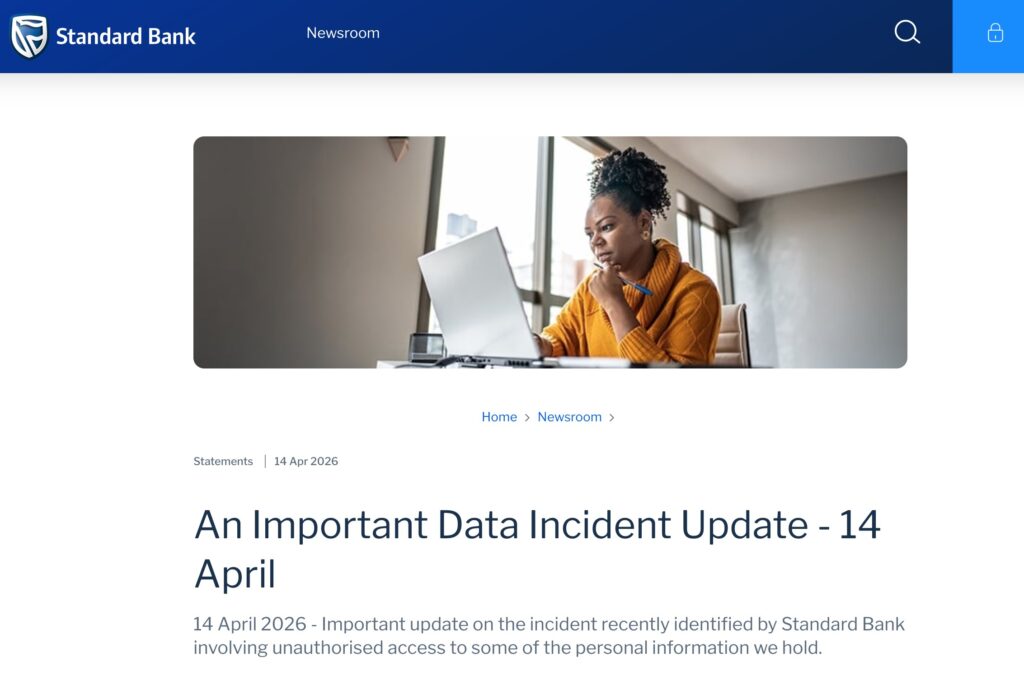
Standard Bank addressed the incident in an official newsroom update, confirming that unauthorized access to certain personal information had occurred. However, the bank emphasized that its core banking systems were not compromised and remain fully operational.
According to the official statement, the potentially affected information may include names, ID numbers, company registration numbers, email addresses, phone numbers, and account numbers. The bank also stated that it is working with external cybersecurity specialists and has notified relevant regulatory authorities. The full response and updates can be found in Standard Bank’s official newsroom announcement.
Potential Risks For Customers:-
Even when financial systems are not directly affected, exposure of personal data can still create risks. Cybersecurity experts warn that such information can be used for phishing emails, fraudulent phone calls, and identity theft attempts.
Attackers may use leaked details to impersonate legitimate bank communications, making scams more convincing. Customers are therefore advised to remain vigilant and avoid sharing sensitive information unless they are certain of the source.
Safety Measures And Recommendations:-
Standard Bank has encouraged customers to take precautionary steps, including monitoring their accounts for unusual activity, updating passwords, and enabling multi factor authentication where available. Individuals should also be cautious about unexpected emails or messages claiming to be from the bank. Experts recommend verifying any suspicious communication directly through official channels.
Investigation Still Ongoing:-
The investigation into the alleged breach is ongoing, and the full impact remains unclear. The claim of 1.2TB of stolen data, if confirmed, would represent a significant volume of information.
Authorities and cybersecurity teams are continuing to analyze the situation while the bank provides updates as more details emerge.
This incident highlights the growing challenges financial institutions face in protecting sensitive data and reinforces the importance of cybersecurity awareness for both organizations and customers.

De Roka (Suman Roka) is an online scam researcher and consumer protection advocate who has been investigating internet fraud since 2014. He is the founder of De-Reviews.com and former owner of NewsOnlineIncome.com, and works as an Anti-Scam Consultant with the Global Anti-Scam Alliance (GASA.org) and as a content partner with ScamAdviser.
His work focuses on exposing online scams and helping users stay safe from fraudulent websites and schemes. After personally experiencing online scams, he began researching suspicious platforms and sharing findings to protect others.
Today, De-Reviews.com operates as a team of researchers and editors dedicated to identifying scam patterns and educating the public about online threats. Learn more about the team and mission on our About Us page.


Leave a Reply