
A new PayPal related scam has been making rounds online, targeting unsuspecting users through small but strategic transactions. While the payments themselves may seem harmless, they are part of a larger scheme designed to trick victims into contacting scammers and sharing sensitive information. This article explains how this scam works, shares real life examples, highlights warning signs, and provides safety tips to avoid falling victim.
How The Scam Works:-
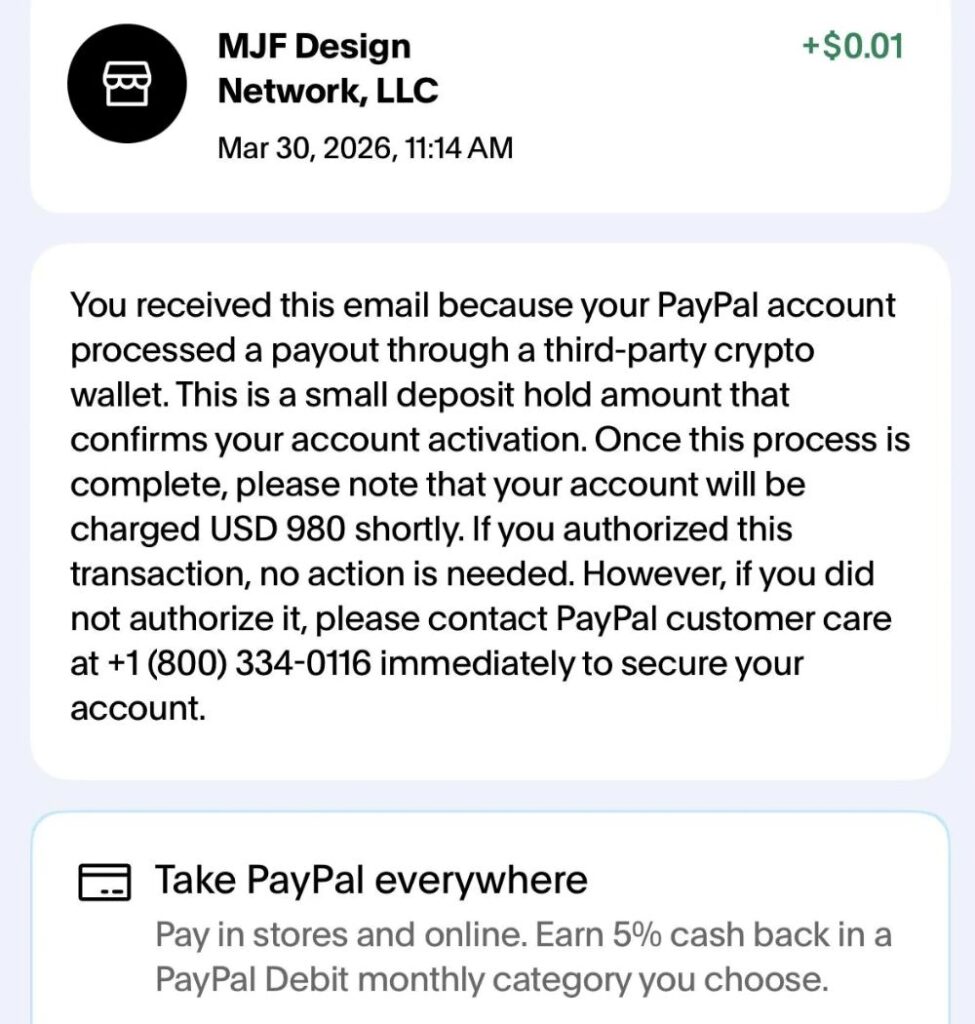
The scam involves a very small payment, often just a few cents, sent from an entity named “MJF Design Network LLC.” The transaction appears legitimate because it is processed through PayPal, which many people trust. Along with the payment, a message or note is included, instructing the recipient to urgently call a phone number. This is the trap. The scammers are not trying to steal the tiny amount sent, their goal is to make the victim contact them directly.
Once a person calls the number, the scammer poses as a PayPal customer service representative. They create a sense of urgency, claiming that the recipient’s account is at risk or that a large payment has been accidentally charged. The scammers then attempt to collect personal details such as login credentials, bank account information, or verification codes, which can lead to identity theft or unauthorized transactions.
Real Life Examples:-
Many users have shared their experiences with this scam on online forums. In one case, a person received a $0.01 payment with a note that seemed professional and included instructions to call immediately. The recipient was warned not to ignore the message, as it claimed a large charge was pending on their account. Although the amount sent was minimal, the message seemed legitimate enough to create panic and push the victim toward calling the number.
Other users reported receiving small payments accompanied by notes claiming that hundreds of dollars would soon be charged. The scammers relied on fear and urgency to convince people to act quickly without verifying the details directly in their PayPal account. Multiple victims have confirmed that these transactions often only require the recipient’s email address to trigger the scam. The tiny payment makes the whole process look authentic, even though it is a setup to gain personal information.
Many users have reported similar scams in the past. According to a CBS news report, scammers have been using PayPal to trick victims into sharing personal information, often through urgent messages or small fake payments. This shows that the MJF Design Network LLC scam is part of a larger pattern of PayPa related fraud targeting users.
Why This Scam Is Effective:-
There are several reasons this scam works so well:
- The transaction is real: Because PayPal processes the payment, it appears in the account like any normal transaction.
- The message creates urgency: The scammers often include language that pressures victims to act immediately.
- Phone numbers appear official: The scammers provide numbers that look like legitimate support lines.
- Fear of a large charge: Many victims are tricked into believing that a substantial amount will be withdrawn from their account.
By using a trusted platform like PayPal and leveraging small, real payments, scammers are able to make their message appear credible. Victims are more likely to follow instructions when they believe their account could be at risk.
Variations Of The Scam:-
While the MJF Design Network LLC scam is the most commonly reported, there are other similar variations:
- Small payments with urgent notes: A few cents are sent, and the message asks the recipient to call immediately.
- Fake invoices: Scammers send invoices for large amounts, claiming that the victim needs to cancel or confirm the payment.
- Warnings about account suspension: Messages claim the PayPal account will be suspended unless the recipient acts quickly.
- Phishing attempts via email or text: In some cases, scammers send fake notifications asking users to log in and verify their accounts.
The common goal in all these cases is to push victims into direct communication, where scammers can attempt to steal login details, verification codes, or banking information.
Warning Signs To Watch For:-
It is important to recognize the red flags associated with this type of scam:
- Receiving a small payment from an unknown sender
- Instructions to call a phone number included in the payment note
- Messages using urgent or alarming language such as “act now” or “payment pending”
- Mentions of large charges the recipient did not authorize
- Requests to cancel transactions by phone instead of through the official PayPal platform
PayPal and other security experts emphasize that legitimate platforms will never ask users to call a number or provide sensitive information outside the official website or app.
What Happens If You Call The Scammer:-
Victims who call the number provided in the scam message often face several threats:
- Scammers may ask for login credentials to verify the account.
- They can request one-time verification codes sent via SMS.
- They may try to gain remote access to your device.
- They might collect bank account or credit card details.
Sharing any of this information can give scammers access to your funds, identity, and personal information, potentially causing serious financial and privacy consequences.
Steps To Stay Safe:-
If you receive an unexpected PayPal payment with a message asking you to call a number, it is important to take the following steps:
- Do not call the phone number.
- Do not reply to the message.
- Check your PayPal account directly through the official website or app.
- Report the transaction to PayPal using the official channels.
- Forward suspicious emails to PayPal’s phishing email address.
- Change your account password if you feel uncertain about security.
By staying calm and verifying transactions independently, you can avoid falling into the trap set by scammers.
Real Life Scenario Illustration:-
Imagine receiving a $0.01 payment with a note stating: “Your account will be charged $950. Call support immediately.” Panic sets in, and you call the number. A person answers claiming to be PayPal support, asking you to provide your email, password, or verification code. Once this information is shared, the scammer could potentially access your account and steal funds or personal data.
This type of scam has caused confusion and anxiety among many users, especially those who are less familiar with digital payment platforms.
Final Thought:-
The MJF Design Network LLC PayPal scam demonstrates how even small transactions can be used to create fear and manipulate victims. The key takeaway is that the payment itself is harmless, but the phone number included in the note is a trap. The safest approach is never to call unexpected numbers provided in payment messages. Always verify transactions through your official PayPal account and report suspicious activity immediately.
Being aware of the tactics scammers use and remaining cautious with unexpected messages can help protect you from financial loss and identity theft.
By following the steps outlined above, PayPal users can navigate their accounts safely and avoid becoming a victim of this growing online scam.



Leave a Reply