
Drivers in Ohio should be on high alert as a new text message scam falsely claiming to be from the Ohio Bureau of Motor Vehicles (BMV) spreads across the state. These messages warn recipients that they have unpaid traffic tickets, toll violations, or parking fines and demand immediate payment to avoid penalties.
While they appear official, authorities have confirmed that these messages are fraudulent attempts aimed at stealing personal and financial information. This scam is part of a growing trend of government impersonation fraud targeting unsuspecting citizens.
How The Ohio BMV Unpaid Ticket Scam Works:-
The scam typically starts with a text message claiming you owe money for a traffic violation or unpaid fine. The message often demands urgent payment, threatening license suspension, court action, or extra fees if you fail to act. Some versions include QR codes or links directing recipients to fake payment websites. These sites may ask for sensitive information, such as credit card numbers, driver’s license details, or other personal data, which scammers then use for financial theft or identity fraud.
Officials stress that the Ohio BMV never sends text messages demanding immediate payment or requesting private information. Legitimate notices usually arrive via official mail or verified channels. This scam is designed to create a sense of urgency and panic, making it more likely that victims act without verifying the message. You can read a news report covering this scam by Fox19 for more context.
Common Warning Signs:-
Here are some key red flags that can help you identify this scam:
- Unexpected messages claiming you owe money for fines or tickets. Government agencies do not request payments via unsolicited texts.
- Suspicious links or QR codes that do not lead to official government domains.
- Threatening language such as license suspension, court action, or immediate penalties if you do not pay.
- Fake legal references or court codes meant to intimidate you.
Local authorities, including the Hancock County Sheriff’s Office, have warned residents about this type of scam through their facebook post. Additionally, the Ohio Auditor of State has issued a public notice reminding citizens to be cautious of such fraudulent messages.
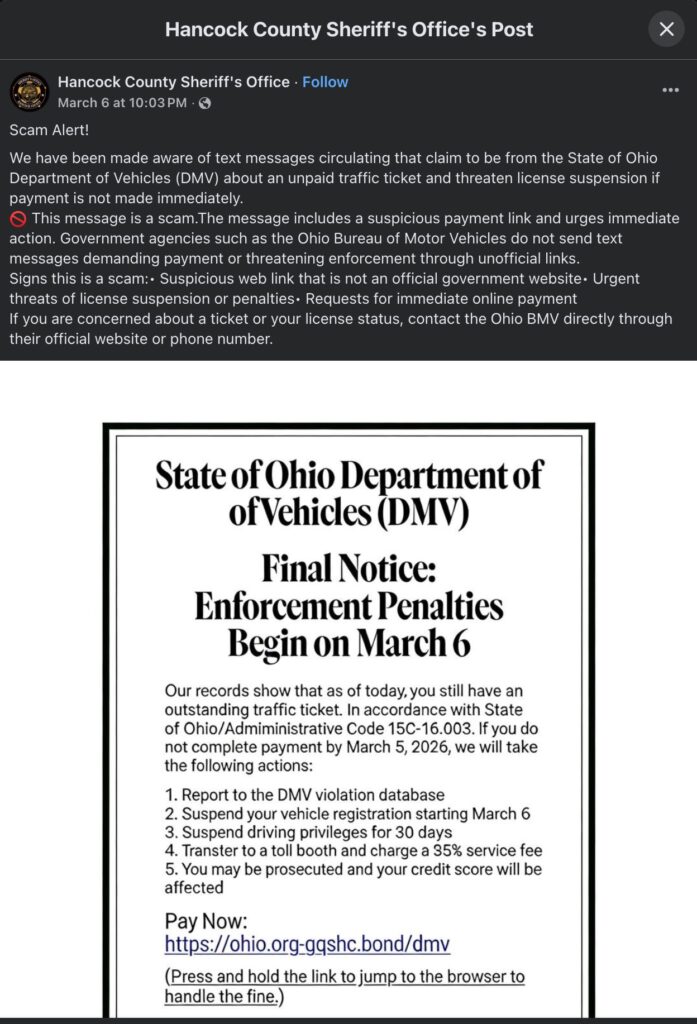
Real Life Examples:-
Victims report receiving texts saying they must pay an outstanding ticket within 24 hours or face license suspension. These messages often include links to fake payment portals. Once users enter their personal information, scammers may steal money directly from accounts or use the data for identity theft. Some messages include QR codes that redirect to malicious websites, which can also install malware or compromise devices.
This scam is not isolated. Similar fraud schemes have appeared nationwide, targeting drivers with false toll fees, parking fines, and other traffic violations. Scammers often reuse the same template while changing the state or agency name to appear credible.
What To Do If You Receive This Message:-
If you receive a text claiming to be from the Ohio BMV or any government agency about unpaid tickets:
- Do not click any links or respond to the message.
- Delete the message immediately.
- Contact the agency directly using official phone numbers or website addresses to verify if a payment is due.
- Report the message as spam through your phone or email service to help block similar scams.
- Monitor your accounts if you already clicked a link or entered personal information, and alert your bank immediately.
Additional Safety Tips:-
- Always verify unexpected payment requests by checking official mail or contacting the agency directly.
- Avoid providing personal information on websites you do not recognize.
- Be cautious of messages that threaten immediate legal action or license suspension.
- Enable spam filters on your phone to reduce the likelihood of receiving fraudulent texts.
Final Thoughts:-
The Ohio BMV unpaid traffic ticket scam is a stark reminder of how convincing phishing and impersonation scams have become. By pretending to be trusted government agencies and creating urgency, scammers aim to trick victims into paying money or revealing sensitive information.
Legitimate authorities will never demand payment through unsolicited text messages. Remaining vigilant, verifying all communications, and ignoring suspicious messages are the most effective ways to protect yourself.



Leave a Reply