
Missouri residents are currently being targeted by a widespread text message scam that appears surprisingly real at first glance. These fraudulent texts claim that you have unpaid traffic tickets, toll violations, or even final notices from a court. But these messages are fake, and clicking on the links they contain can put you at risk of identity theft, malware infections, and financial loss.
According to multiple officials and public safety agencies in Missouri, including the Missouri Highway Patrol and the Missouri Department of Revenue, these text messages are not legitimate. They are part of a scam designed to trick people into providing personal information or making fake payments.
Why This Scam Is Dangerous:-
Here is what the authorities have confirmed about the scam:
- The texts are not from any real court or government office. Scammers often refer to made‑up institutions such as the Missouri Superior Court to make the message seem official.
- Case numbers and citation numbers are fabricated. The information in the message is fake and does not match any real ticket or court record.
- The links or QR codes in the messages are dangerous. If you click on these links, your phone or computer could be exposed to malware, spyware, or viruses that steal personal information.
- Legitimate government agencies in Missouri do not send payment requests via text messages. If you receive a text demanding payment for a ticket or fine, it should be treated as suspicious.
The Missouri Department of Revenue clearly states that they do not send text messages for fine payments and urges residents to use official state government sites instead.
Another recent warning from the courts also confirms this scam is actively circulating.
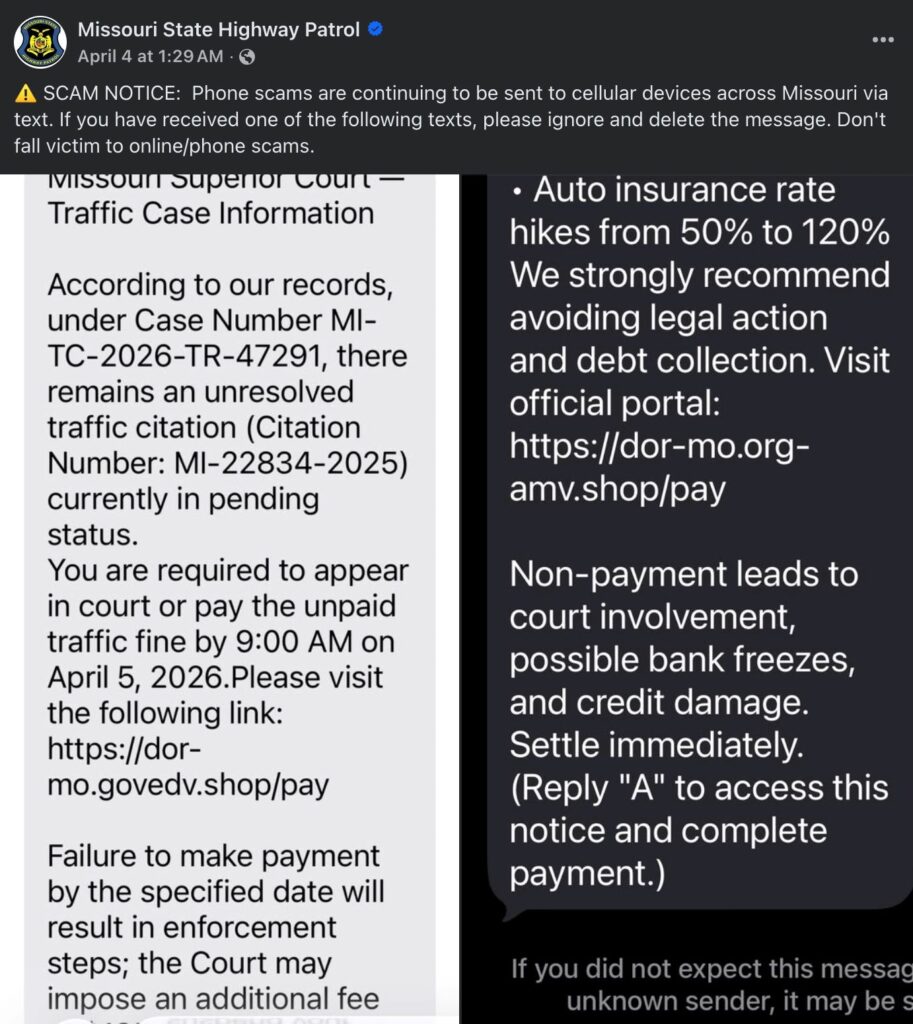
In addition, the official Missouri State Highway Patrol’s Facebook page has publicly warned residents about these scam messages and advised the public to avoid clicking on any links.
How The Scam Typically Appears: Real Examples:-
Below are two real, scam text message examples that scammers are sending:
Scam Text Example No.1:-
"Missouri Superior Court Traffic Case Information According to our records, under Case Number MI- TC-2026-TR-47291. there remains an unresolved traffic citation (Citation Number: MI-22834-2025) currently in pending status. You are required to appear in court or pay the unpaid traffic fine by 9:00 AM on April 5, 2026.Please visit the following link: https://dor- mo.govedv.shop/pay Failure to make payment by the specified date will result in enforcement steps; the Court may impose an additional fee..."
Scam Text Example No.2:-
"Auto insurance rate hikes from 50% to 120% We strongly recommend avoiding legal action and debt collection. Visit official portal: https://dor-mo.org- amv.shop/pay Non-payment leads to court involvement, possible bank freezes, and credit damage. Settle immediately. (Reply "A" to access this notice and complete payment.)"
Key Warning Signs In These Messages:-
These examples show several typical red flags:
- Fake domain names: The links end with .shop or oddly formatted URLs that do not belong to any official Missouri government site.
- Urgent threats: Scammers use fear tactics, such as imposing fines or insurance hikes, to make you act quickly.
- Unusual grammar or formatting: Terms like Missouri Superior Court (which doesn’t exist in that form) are often used to confuse or impress.
What You Should Do If You Receive One of These Messages:-
Here’s a clear, step by step guide on what to do if you get a suspicious text about a traffic ticket or fine:
Do Not Click On Any Links or Scan Any QR Codes:-
Even if the message appears to come from an official sounding source, do not click on the link. Scammers use these links to install malware on your device, steal your data, or direct you to a fake payment page.
Do Not Respond To The Message:-
Replying with any information, even just saying “STOP” can confirm to scammers that your phone number is active. Once they know your number works, they may send you more scam messages.
Delete The Message Immediately:-
Removing the message helps prevent accidental clicks and reduces stress from seeing it multiple times.
Verify Through Official Sources:-
If you are genuinely concerned that you owe a traffic ticket or fine, do not use the link in the text. Instead:
- Visit the official Missouri Department of Revenue website manually by typing dor.mo.gov into your browser.
- Use the official government portal to check your record or confirm any citations.
- Contact the Missouri Highway Patrol or the court directly using known official phone numbers, not the numbers in the suspicious message.
How Scammers Are Targeting People:-
Scammers collect phone numbers in large batches from various sources, including public listings, data breaches, or automated guessing. Once they have a list of numbers, they send out these scam texts in bulk, hoping someone will take the bait.
These schemes tend to increase when people are busy, for example, near holidays or at the start of a new year because scammers know some individuals are more likely to rush or overlook small warning signs.
Protecting Yourself In The Future:
To guard against similar scams:
- Be skeptical of any unexpected message claiming to be from a government agency.
- Never use links provided in unsolicited texts to make payments or verify information.
- Keep your phone and computer software updated so they have the latest security protections.
- Consider using spam blocking tools or message filtering features to reduce scam texts.
Conclusion:-
Scams like these can be worrying, but staying informed is the strongest defense. Missouri officials have been very clear:
- These text messages are scams.
- They are not legitimate court or government notifications.
- Clicked links can put your personal information at risk.
If you want to check whether a ticket is real, always use official channels, not links sent via text. By understanding how these scams work and using verified government resources, you can protect yourself and your family from falling victim to fraud.



Leave a Reply