
Tinnitus, the constant ringing or buzzing sound in the ears, affects millions of people worldwide. Because there is currently no simple cure, many people look for alternative treatments that promise quick relief. One such product gaining attention is Calmynix Red Light Therapy for Tinnitus.
The company claims that its device can reduce or even eliminate tinnitus symptoms using red and near infrared light therapy. But the question is: does it actually work, or is it just another overhyped product?
In this review, we will break down the science, expert opinions, marketing claims, and website concerns to help you understand the truth.
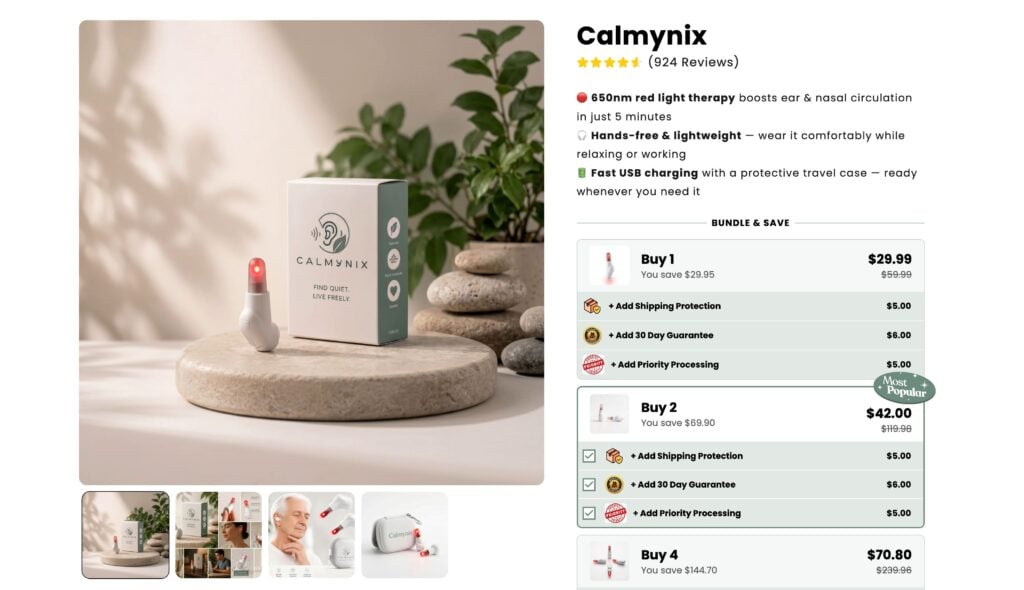
What Is Calmynix Red Light Therapy:-
Calmynix is a consumer device that uses Low-Level Light Therapy (LLLT), also known as red light therapy. The idea behind it is that specific red and near infrared wavelengths may stimulate cellular activity, improve blood flow, and reduce inflammation in the body.
In theory, this therapy is linked to mitochondrial stimulation, which may help repair damaged cells. Some early research has explored whether it could support inner ear health and reduce stress on hair cells in the cochlea.
However, it is very important to understand that the device is marketed for tinnitus relief, which is where scientific support becomes weak.
What Does The Science Actually Say:-
While Low Level Light Therapy is a real scientific concept, its effectiveness for tinnitus is still highly uncertain.
Research suggests:
- Some animal and early human studies show possible improvement in ear cell protection under oxidative stress
- A few small studies report mild symptom reduction in some users
- But many clinical trials show no significant difference compared to placebo
Major organizations, including audiology associations, do not recognize red light therapy as a proven treatment for tinnitus.
Even the American Tinnitus Association and clinical guidelines (such as VA/DoD 2024) do not recommend consumer red light devices.
Why Experts Are Not Convinced:-
There are several important reasons why Calmynix and similar devices are viewed with caution:
Tinnitus Is a Brain Condition, Not Just an Ear Issue:-
Modern research shows that chronic tinnitus is often linked to brain signal changes and neural sensitization, not just damaged ear cells. A device placed near the ear cannot correct these brain level changes.
Mixed and Unreliable Study Results:-
While a few studies show minor improvement, many others show no measurable benefit beyond placebo. This makes it difficult to confirm real effectiveness.
Strong Placebo Effect:-
Tinnitus symptoms are highly influenced by stress, attention, and emotional state. Many users feel temporary relief simply because they expect improvement.
Not Clinically Approved:-
No consumer red light therapy device, including Calmynix, is FDA approved or medically certified as a treatment for tinnitus.
Marketing Claims Vs Reality:-
Calmynix is marketed in a way that suggests fast and noticeable relief from tinnitus. However, experts warn that such claims are often exaggerated.
Common concerns include:
- Promises of quick miracle results.
- Heavy discounts and urgency based marketing.
- Lack of clinical validation for tinnitus treatment.
- Selling a simple LED based device at high prices.
In reality, tinnitus is a complex neurological condition, and no device can guarantee a cure in a short time.
| Marketing Claims | Reality |
|---|---|
| Cures tinnitus completely. | No proven cure for chronic tinnitus. |
| Works in weeks. | Results are inconsistent or minimal. |
| Scientifically proven. | LLLT is real, but not proven for tinnitus treatment. |
| Targets root cause. | Tinnitus is mainly brain based, not only ear damage. |
| Expert recommended. | Not recommended by major audiology organizations. |
| FDA-approved treatment. | No approval for tinnitus use. |
| Permanent relief. | Any relief is often temporary or placebo based. |
| Breakthrough cure. | Evidence is still experimental and mixed. |
Proven And Recommended Tinnitus Treatments:-
Instead of relying on unverified devices, medical professionals recommend evidence-based treatments:
Hearing Aids:-
For many people, tinnitus is linked to hearing loss. Hearing aids help reduce strain on the auditory system and often significantly reduce tinnitus symptoms.
Sound Therapy:-
Using white noise, nature sounds, or tinnitus masking apps can help the brain gradually ignore the ringing.
Cognitive Behavioral Therapy (CBT):-
CBT is one of the most effective methods for managing tinnitus distress. It helps patients change how they emotionally react to the sound.
Neuromodulation Devices:-
New FDA cleared technologies like bimodal stimulation devices are being studied and used under medical supervision.
Website And Trust Concerns About Calmynix.com:-
Apart from scientific concerns, there are also red flags related to the Calmynix website itself:
- The website does not clearly provide social media links to verified profiles.
- The refund policy appears generic and confusing, similar to multiple low-trust sites.
- Website design and content structure resemble other questionable product pages.
- There are multiple negative reviews on third party review platforms and trust checking websites.
- The product is promoted with heavy discounts, a common tactic used by low credibility online stores.
These issues raise concerns about transparency and reliability.
Final Verdict:-
Calmynix Red Light Therapy for Tinnitus is based on a real scientific idea (LLLT), but its application as a tinnitus cure is not supported by strong clinical evidence.
While some users may report temporary relief, this is likely due to placebo effects or natural symptom fluctuation rather than a true medical cure.
- Scientific basis exists, but evidence for tinnitus treatment is weak.
- Not approved by major medical organizations.
- Marketing claims appear exaggerated.
- Website trust signals raise additional concerns.
If you are considering Calmynix, it is important to keep realistic expectations. It should not replace proven treatments like hearing aids, sound therapy, or CBT recommended by professionals. Always consult a qualified audiologist or ENT specialist before trying experimental devices.

De Roka (Suman Roka) is an online scam researcher and consumer protection advocate who has been investigating internet fraud since 2014. He is the founder of De-Reviews.com and former owner of NewsOnlineIncome.com, and works as an Anti-Scam Consultant with the Global Anti-Scam Alliance (GASA.org) and as a content partner with ScamAdviser.
His work focuses on exposing online scams and helping users stay safe from fraudulent websites and schemes. After personally experiencing online scams, he began researching suspicious platforms and sharing findings to protect others.
Today, De-Reviews.com operates as a team of researchers and editors dedicated to identifying scam patterns and educating the public about online threats. Learn more about the team and mission on our About Us page.


Leave a Reply